What EU GPSR means for your listings and product images
The EU General Product Safety Regulation has applied since 13 December 2024 and sets clear rules for what online listings must show. Here's what sellers need on the listing page, in product images and on packaging labels.

The EU General Product Safety Regulation — Regulation (EU) 2023/988, or GPSR — has applied since 13 December 2024, replacing the old General Product Safety Directive. For cross-border sellers, the most visible change is that the product listing itself must display product safety information, not just the product and its packaging.
This isn't legal advice. Requirements depend on product category, destination country and professional guidance. We're looking at it from an operational and visual-preparation angle: what sellers actually need to do.
What GPSR requires online
Under the regulation's provisions on distance sales, an online offer should clearly and visibly show:
| Information | What it means |
|---|---|
| Manufacturer | Name, registered trade name or trademark, postal and electronic contact |
| EU responsible person | If the manufacturer is outside the EU, the name and contact details of the responsible economic operator in the EU |
| Product identification | A picture of the product, its type and any other identifier (model, batch) |
| Warnings and safety information | In a language consumers can easily understand, as set by the member state where it's sold |
Major marketplaces have added fields for this — manufacturer details, EU responsible person, safety document uploads. Field names and locations vary, so follow your marketplace's back end.
Three ways it touches your images
Many sellers think GPSR just means filling in a few more fields. It affects product images directly.
1. Your product image is part of product identification
The regulation asks for information that identifies the product, including a picture. Images should therefore show the actual product being sold — same model, colour and accessories. Using another model's photos, or retouching so heavily the product no longer looks like itself, can cause problems.
2. Warnings need to be visible
Products that require warnings — toys with small parts, age-restricted items, appliances with specific usage precautions — need those warnings shown on the listing, in the language of the destination country. Many sellers add a "safety and usage" image to the secondary images and repeat the information in the text.
When making that image:
- Match the language to the market: German for Germany, French for France;
- Keep it consistent with the packaging and manual;
- Make the type large enough to read on a phone;
- Don't let decorative design weaken the warning.
3. Real photos of packaging and labels
Some marketplaces ask for photos of product labels or packaging during review, to check that manufacturer details, model or batch numbers and EU responsible person information appear on them.
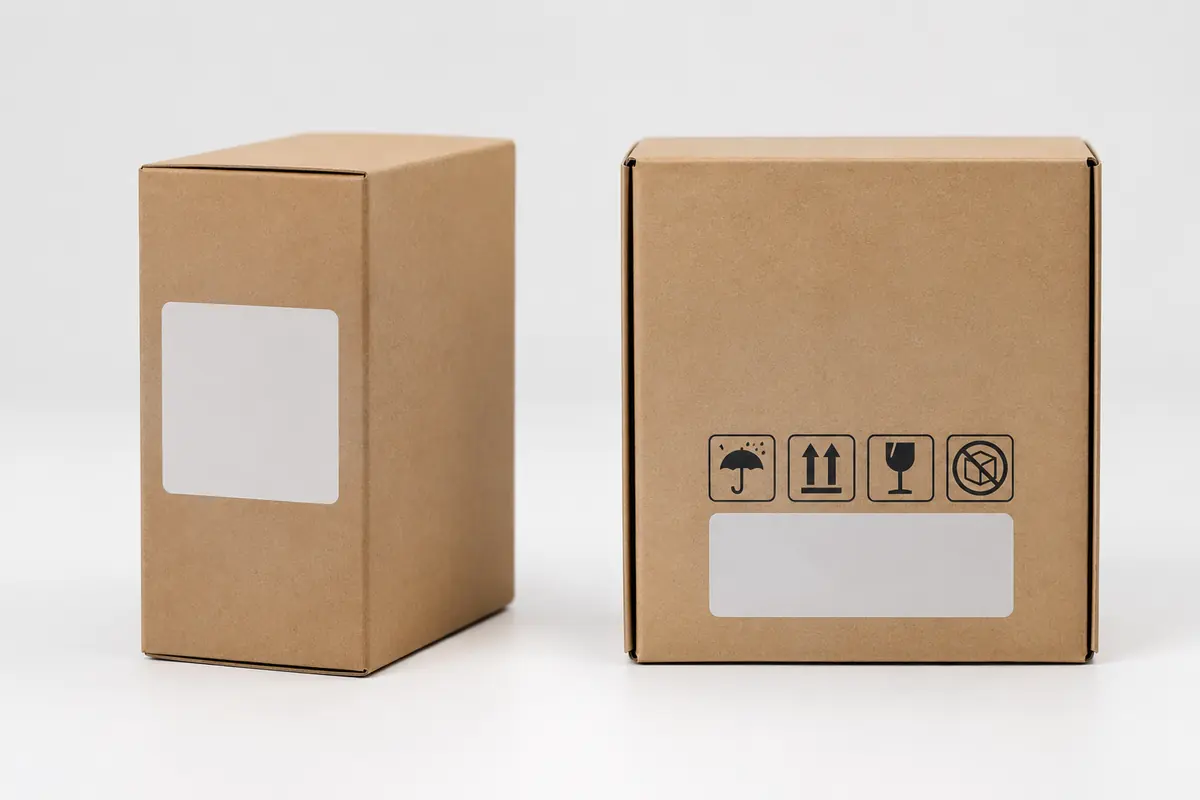
These photos must be sharp, real and legible:
- Shot straight on, with label text readable;
- Even light, no glare over the text;
- Never composited or edited — if a label is missing information, fix the label, not the photo.
What the product and packaging need
GPSR also sets expectations for the product itself. Before production or labelling, confirm with your factory that:
- The product carries a type, batch or serial number, or, where it's too small, that information is on the packaging or an accompanying document;
- The manufacturer's name and contact details are on the product, packaging or accompanying document;
- If the manufacturer is outside the EU, the EU responsible person's details are included;
- Safety information and instructions are in the destination country's language.
Once printed on packaging, changes mean a reprint. Settle your EU responsible person before finalising packaging artwork.
Common misunderstandings
"We're too small to be affected." GPSR applies to non-food consumer products sold on the EU market. Seller size isn't an exemption.
"The marketplace handles it." Marketplaces provide fields and run checks, but accuracy and completeness are the seller's responsibility.
"If it's on the listing, the packaging doesn't matter." Listing information should match what's on the product and packaging, and both marketplaces and regulators can compare them.
"We'll just generate a label image." A label photo exists to prove the real product carries that information. A generated or edited one proves nothing and could be treated as false information.
A preparation checklist
- Confirm whether your product falls under GPSR and whether sector rules also apply (toys, electrical equipment and so on);
- Appoint an EU responsible person and sign the agreement;
- Check identification, manufacturer and EU responsible person details on product and packaging;
- Prepare safety information and instructions in each destination language;
- Complete the marketplace fields and upload required documents;
- Add a safety image to secondary images where relevant, and confirm product images match the real item;
- Take clear photos of labels and packaging and keep them on file.
How it relates to other marks
GPSR is a general framework; many products also fall under sector rules, such as CE marking for electrical products. For how to show CE marks in images and the common mistakes, see our guide to CE, FCC and UKCA marks. If you also sell on Temu's semi-managed model, our Temu image checklist covers preparing label photos.
For the safety information image itself, Product image sets can draft a layout that you then fill with verified, translated warnings. The warning content must come from your product testing and professional advice.
Upload one product photo and get a full set of listing-ready visuals in minutes.
Keep reading