Choosing scene styles for home décor: cream, natural wood, new Chinese — start with your buyer's home
Pick the wrong scene style for a home product and buyers think "that wouldn't go in my place". Here's how to choose styles based on your buyers, the visual cues of common Chinese home styles, keeping small homes believable, and generating multi-style scenes with AI.
When people look at scenes for home products, they're mentally placing the item in their own home. If the scene is a 300-square-metre villa and the buyer lives in a 60-square-metre two-bedroom flat, that picture doesn't form.
So choosing a scene style isn't about which style looks best. It's about what your buyers' homes look like.
Start with the buyer
The same table runner or desk lamp should be staged differently for different people. Before choosing a style, ask:
- Roughly what age are your buyers, and what kind of home do they live in?
- What styles do they prefer? Look for clues in review photos and feedback from repeat customers.
- What's the price point? Premium products can have more polished scenes; budget products should feel everyday.
Customer review photos are the best reference you have. Look through a few dozen and you'll quickly see your buyers' floors, walls, furniture and room sizes. Scenes that resemble those photos work better than scenes that resemble magazines.
Visual cues of common styles
| Style | Colour | Materials and elements | Light |
|---|---|---|---|
| Cream | Warm white, latte, apricot | Rounded furniture, teddy fabric, curves | Soft, warm |
| Natural wood | Wood, white, pale grey | Solid wood, cotton and linen, plants | Window light |
| Wabi-sabi | Earth tones, grey, ochre | Rough ceramics, microcement, irregular texture | Low-key, side light |
| New Chinese | Wood, ink black, touches of red or teal | Hardwood, porcelain, calligraphy and tea ware | Gentle, layered |
| Mid-century | Dark wood, caramel, forest green | Vintage furniture, brass, leather | Warm, atmospheric |
| Modern minimal | Black, white, grey | Metal, glass, straight lines | Bright, clean |
This is a starting point. In practice, a style becomes recognisable through three things: dominant colour, materials and signature props. Get those right and the style holds.
Believable small homes
Many buyers in Chinese cities live in small or mid-sized flats. Scenes that are always spacious make products feel like they belong to someone else:
- Show corners, not whole rooms — a corner of the sofa, the dining table or the bed hides room size and feels more lived-in;
- Normal furniture sizes — standard sofas and tables, not oversized pieces;
- Signs of life — an open book, half a cup of tea, a throw tossed casually;
- Storage products prove their value in tight spaces — a narrow hallway or bathroom is more persuasive than a large room.
One product, several styles?
Some merchants shoot one product in several styles. There's a benefit and a cost:
- Benefit — appeals to more tastes, so more buyers think it would fit their home;
- Cost — the shop looks inconsistent, and a main image set that jumps between styles looks messy.
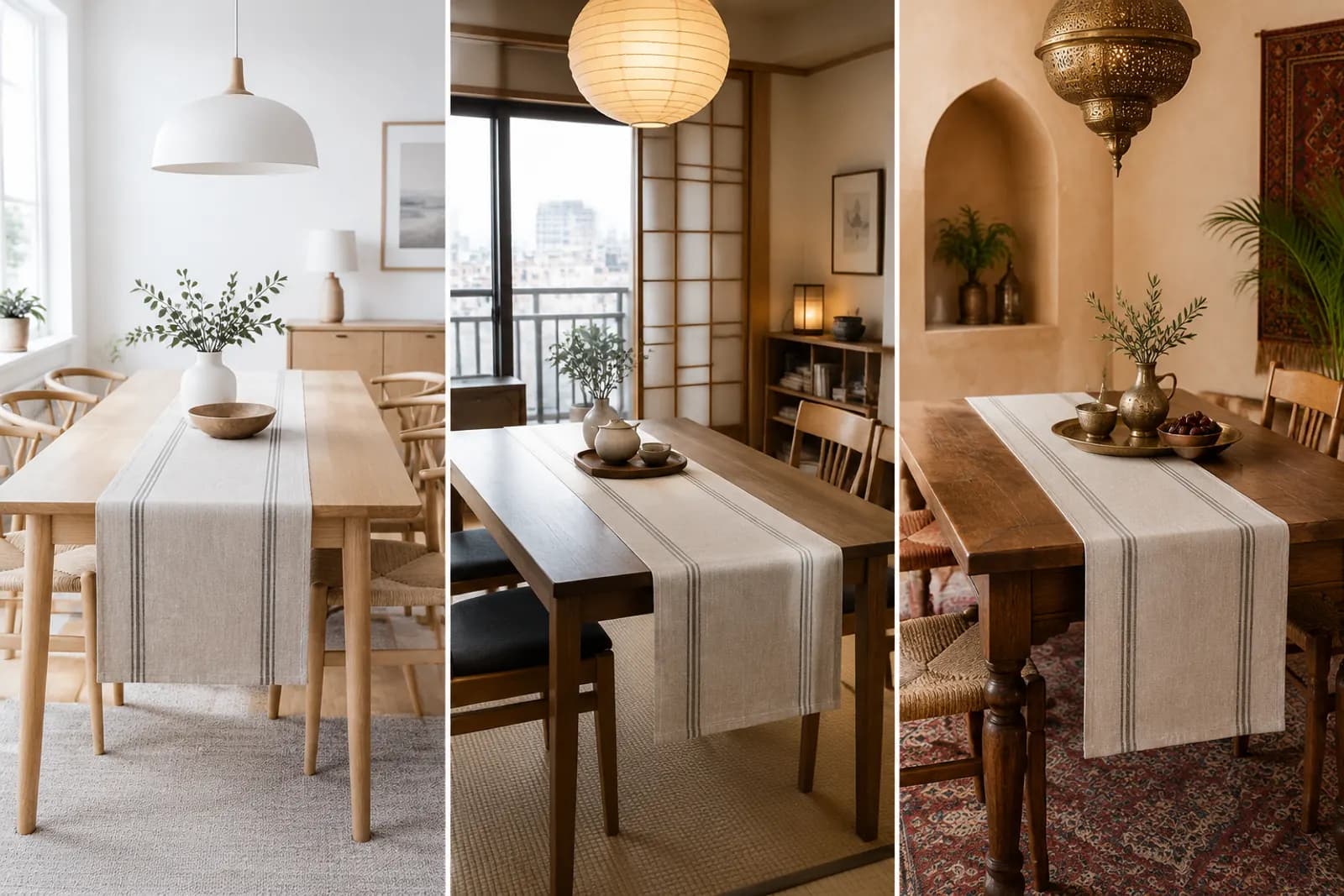
Our advice: keep the main image set to one primary style that matches the shop, and show two or three styling ideas on the detail page as extra possibilities. A linen table runner might use natural wood in the main images, then appear in cream and new Chinese dining rooms further down.
Props
Props create style and a sense of life, but too many steal attention from the product:
- Props serve the style — wooden trays and linen for natural wood, tea ware and scrolls for new Chinese;
- Props never outshine the product in colour or size;
- Avoid implying extras — note "props not included" for vases, plants or ornaments where needed;
- No other brands' marks on props.
Generating multi-style scenes with AI
Home scenes are where AI generation shines. Building a real set takes furniture, props and space; AI can produce different styles from one real product photo quickly.
Upload a real product photo to AI generation and describe the style with keywords from the table, such as "natural wood dining corner, solid wood table, white wall, window light, plants". If you already have a scene you love, Style replication carries its tone and light into new scenes.
Check every result for:
- Scale — does the runner fit the table, is the lamp in proportion to the desk?
- Product appearance — colour, texture and details match the real item;
- Plausible space — sensible furniture placement and correct perspective;
- Consistent light — shadows on the product agree with the scene's light.
For describing light and materials, see advanced prompts for light and materials.
Upload one product photo and get a full set of listing-ready visuals in minutes.
Keep reading