Photographing beauty and skincare: bottles, textures, shades — and the limits on claims
Beauty product images have three technical problems: shooting clear or glossy bottles cleanly, showing creams and serums convincingly, and reproducing makeup shades accurately. Efficacy claims in words and images are regulated too. Here's how to handle each.
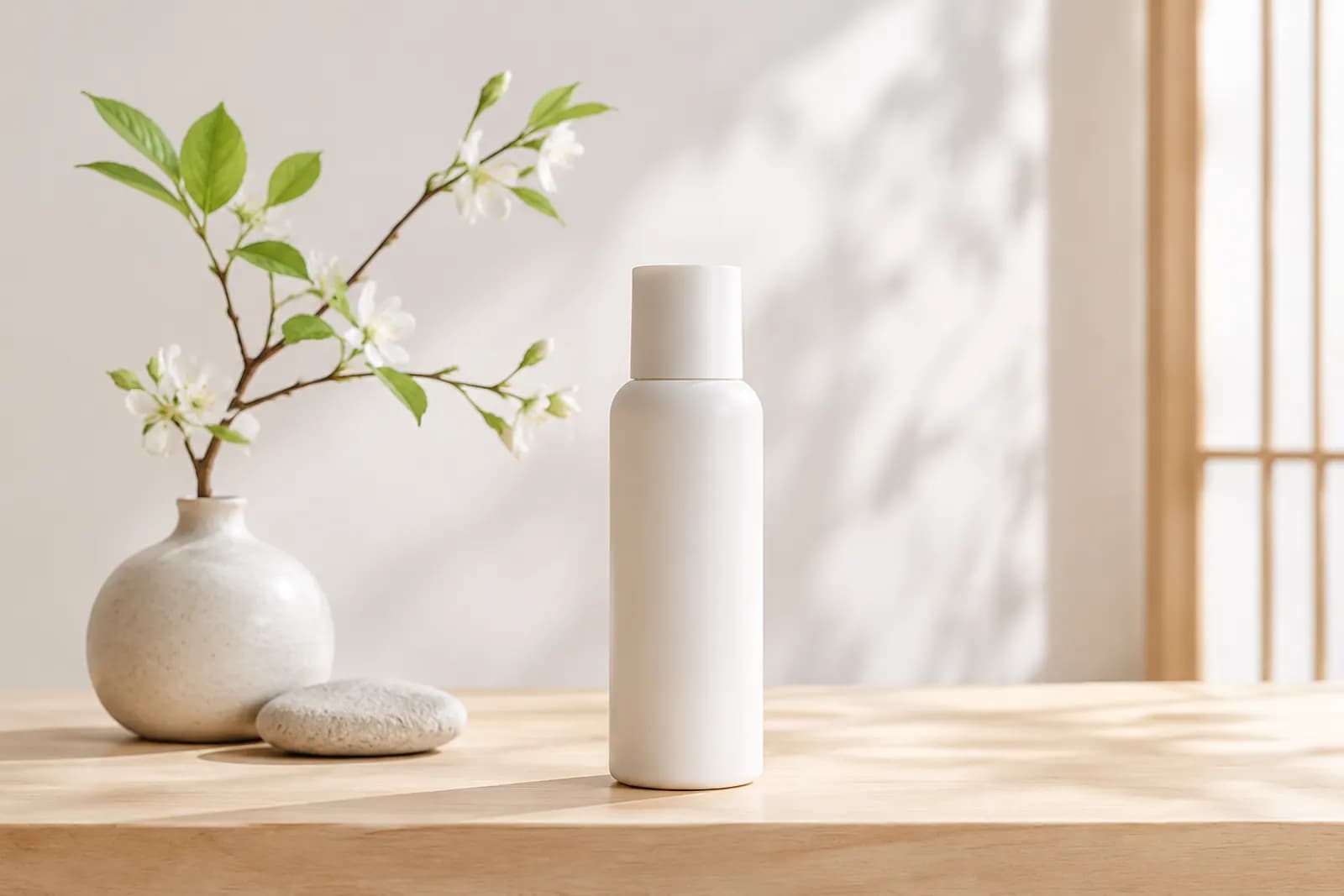
Beauty and skincare is one of the most visually competitive e-commerce categories. Open any skincare page and you'll see polished bottles, glistening droplets and silky textures. Shoppers' standards keep rising, and an ordinary product photo rarely moves them.
But beauty imagery isn't just about looking good. How do you photograph a clear glass bottle without it looking dirty? How do you show a cream's texture? How do you get a lipstick shade right? Each is a technical problem. And cosmetics efficacy claims are regulated, so neither images nor copy can improvise.
1. Bottles: transparency and reflections
Glass and clear bottles
Clear bottles fail in two ways: a messy background shows through, or the edges lack definition and melt into the background.
- Clean backgrounds — plain colour or a simple gradient, so what shows through is clean;
- Backlight or side-backlight for edges — light from behind outlines the bottle with bright lines;
- Black cards for dark edges — black card either side puts crisp dark lines along the glass;
- Liquid colour — backlight makes coloured liquids glow.
Glossy surfaces and metal caps
Glossy bottles and metal caps reflect everything around them — camera, lights, photographer:
- Use large soft light sources so reflections are clean white, not clutter;
- Adjust angles to avoid the camera's reflection;
- Clean up leftover reflections afterwards; Retouch includes reflection removal.
2. Texture: let buyers "feel" it
Texture matters to skincare buyers: light or rich, watery or creamy.
| Texture | How to shoot | Key point |
|---|---|---|
| Serums, toners | A drop from the dropper, droplet close-up | Backlight for clarity |
| Lotions | A small squeeze, or spread on glass | Side light for sheen and flow |
| Creams | A scoop with a spatula, or a spread swirl | Side light for richness |
| Foundation, concealer | Blended on the back of a hand or a card | Natural light, accurate colour |
| Lipsticks, glosses | Bullet close-up, arm swatches | Colour accuracy first |
Texture shots must be real. Substituting another product's texture, or retouching it into an ideal, creates an obvious gap when the product arrives.
3. Shades: accuracy over beauty
For makeup — lipstick, foundation, eyeshadow — shade accuracy decides satisfaction. Colour mismatch is a common cause of returns and bad reviews.
- Standard light — daylight-balanced lights around 5000–5500K, avoiding warm or cool casts;
- A colour chart in a reference frame to correct against;
- Several skin tones — foundation and lipstick look very different on different skin; show several if you can;
- No filters — no beauty filters on swatches; label them "natural light, unfiltered";
- Calibrated monitor — otherwise what you see isn't what buyers see.
4. Props
Common beauty props include water droplets, petals, plants, stone and silk:
- Relate props to ingredients and tone — a plant featured in the formula can appear, but props mustn't imply ingredients or effects the product lacks;
- Don't upstage the product in colour or size;
- Go easy on droplets — a few feel fresh; too many look cheap.
5. Efficacy claims: images and words
Cosmetics efficacy claims are governed by specific regulations and evaluation standards in China. In product images:
- No medical claims — ordinary cosmetics can't claim to treat acne or reduce inflammation;
- Claims need evidence — whitening, anti-wrinkle or "hydrates for X hours" require supporting efficacy evaluation, and some effects fall under special-use cosmetics requiring registration;
- Careful with before/after images — retouched or unproven comparisons can amount to false advertising;
- No absolute terms like "best" or "number one";
- Accurate ingredients — names and amounts as on the label.
A practical rule: any effect you can "see" in an image must be achievable for real. Texture, colour and packaging can be shot beautifully; efficacy can't be photographed into existence.
6. A skincare image set
For a serum:
- Main image — the full bottle, clean background, backlit edges;
- Texture — a droplet falling from the dropper;
- Ingredients — key ingredients, per the label;
- How to use — steps and amount;
- Scene — on a bathroom counter or vanity;
- Specs — volume, shelf life, skin types.
AI-generated beauty scenes
Beauty scenes and mood images suit AI generation well: marble counters, a vanity in morning light, rippling water — sets that are expensive to build. Upload a real product photo to AI generation and describe the scene and light.
But texture shots and swatches must be real — they're the core of how buyers judge the product. Check generated images for warped bottle text or logos. For lighting language, see advanced prompts for light and materials.
Upload one product photo and get a full set of listing-ready visuals in minutes.